


Play Multiple Sports
"The best decision I ever made was quitting every other sport at 10 years old."
You'll never hear a pro say that.
You know what I actually hear? "I played baseball, basketball, and football growing up." "Playing other sports made me better."
Many of them were stars in multiple sports, not just baseball.
Below, listen to Will Blackmon (12-year NFL Veteran) talk about Rocco Baldelli and how great of an athlete he was.

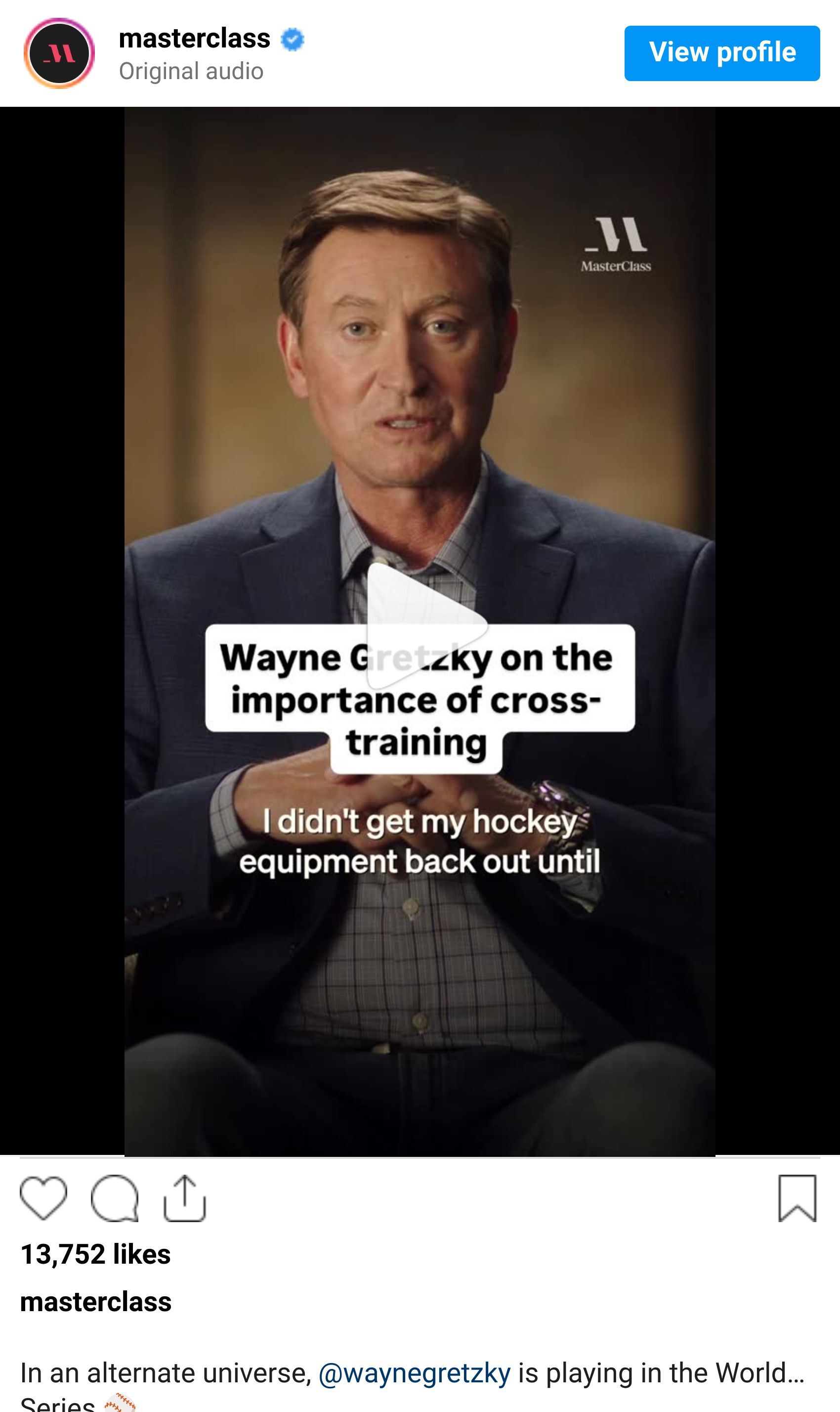
Wayne Gretzky, considered the greatest hockey player of all time, put it this way: "I know, for myself, when the hockey season was over, I couldn't wait to play baseball. I had no interest in playing ice hockey until September."
Yet somehow, we've convinced ourselves that our 10-year-olds need to choose. That if they're not doing travel ball, or taking pitching/hitting lessons year-round, they're falling behind. That taking a season off from baseball to play basketball or hockey means they're not serious enough.
It's backwards. And it's killing the thing we're trying to protect: their love for the game.
How many kids playing in the Little League World Series end up in the MLB?
Almost none.
The best 12-year-olds in the world throwing 75 mph, hitting home runs almost every at-bat, and dominating on TV? Only 74 of them have ever made it to the MLB.
Less than 1%. Let that sink in.
So don't focus on making them the best at 12. Let them play and be kids.
The Fear That's Driving Bad Decisions
I get it. You see the kid down the street who plays baseball 10 months a year. He's on two travel teams. He goes to showcases in the winter. And you think, "My kid is going to fall behind."
Here's what I know after years of coaching youth baseball: the ones who burn out aren't the ones who "weren't good enough." They're the ones who did too much, too young, for too long.
The kid who plays baseball year-round at 12? By 15, there's a good chance he doesn't want to play anymore. Not because he wasn't talented. Because baseball stopped being fun and started being a grind.
Even if they still love it? Their body might not hold up. Dr. James Andrews, one of the world's leading sports surgeons, tracked a five to sevenfold increase in youth sports injuries between 2000 and 2013. Almost half of all sports injuries in adolescents stem from overuse. Playing the same sport year-round doesn't just risk burnout.
It risks injury.
The Reality Check
Let me show you something that might surprise you. According to NCAA data, here's what actually happens to high school athletes:
Out of every 100 high school baseball players, only 2 will play Division I in college.
Out of every 100 high school basketball players, only 1 will play Division I.
The bottom line? Over 90% of high school athletes will never play their sport in college at any level.
And nobody wants to say this part out loud: 99% of the kids playing youth sports right now will not become professional athletes.
So why are we structuring their childhood like they're training for the Olympics?
A few months ago, I sat down with my kids after dinner and showed them the NCAA chart. I walked them through the numbers: only 2.4% will play Division I.
I asked them to think about the kids they know. Their teammates. The best players in their league. And then do the math on how many would actually play Division I baseball or basketball.
They looked shocked.
And here's the part that really puts it in perspective: even if your kid beats those incredible odds and “makes it”, the average MLB career is just 5.6 years. 1 in 5 players will play only 1 season.
Go on LinkedIn and search for former athletes you followed or watched as a kid. Many of them have profiles because there is life after sports. Very few earn enough money to be financially free, so they move on and start their new chapter.
Parents think early specialization is the path to scholarships and stardom. It's not. Playing multiple sports, learning from different coaches, and staying hungry, that's what builds athletes who actually make it.
The odds are stacked against you. So why not play multiple sports and enjoy the ride?
What Multi-Sport Actually Does
Playing different sports keeps kids hungry.
They meet new teammates. They adapt to different coaching styles. They learn new skills, new strategies, new ways of competing. And then, when baseball season rolls around again? They're excited. They've missed it. The fire is still there.
I played three sports growing up: baseball, basketball, and soccer. Some of my best memories aren't about the games themselves. They're about playing with my friends. Basketball brought me closer to guys I might not have connected with otherwise. Soccer did the same.
By sophomore year of high school, I started focusing my winters on getting stronger for baseball instead of playing basketball. Not because someone told me I had to specialize, but because I could see real college opportunities developing. Senior year, I stepped away from soccer for the same reason. I had a baseball scholarship waiting.
By the time I focused exclusively on baseball, years playing those other sports had built the competitor in me who eventually got drafted by the Mets.
If my parents had pushed me to specialize? I never would have developed that foundation. I probably would have been burned out by the time college rolled around. And I definitely would have missed out on some of my closest friendships.
The Falling Behind Myth
"But what if my kid falls behind?"
If your kid really wants it, they'll catch up. And if they don't, then maybe this wasn't their sport anyway.
The skills that matter most in sports, aren't the ones you develop by grinding the same sport all year long. They're athleticism, adaptability, mental toughness, and passion. Multi-sport kids develop all of those naturally.
The kid who took three months off to play basketball comes back to baseball with fresh legs, new footwork, better hand-eye coordination, and most importantly, he actually wants to be there.
The kid who never stopped? His arm is tired, his legs are heavy, and he's already thinking about what else he could be doing.
When Does Specialization Make Sense?
Around 16, things change. If your kid is legitimately good, if they have a real shot at playing college baseball at a high level, then yeah, specialization starts to make sense. At that point, the competition is serious. The stakes are real.
But here's the key: ONLY if they're truly at that level. If your 16-year-old is a solid high school player but isn't getting looks from college coaches, advise them to keep playing multiple sports.
Let them enjoy being a high school athlete.
What We Actually Want
At the end of the day, what do we actually want for our kids?
We want them to love sports. To learn about competition, teamwork, perseverance, and handling failure. To build confidence. To make memories.
So let your kid play another sport. Let them play basketball or hockey with their friends from school. Let them experience different teams, different coaches, different challenges.
I highly recommend every parent spend five minutes having this conversation with their own kids. Show them the NCAA data.
Let them do the math. Let them see the reality.
Because once they understand how rare it is to play college sports, they might just relax and enjoy being a kid. They might stop putting so much pressure on themselves to be perfect at one sport. They might actually keep the love of the game alive.
Let them be a kid and play.
On Deck
Next week: Jim Foster
Baltimore Orioles, Triple-A Catcher of the Year, 20-year college coach

Help me keep more kids in the game. If you found this helpful, please forward it to another parent or coach.
Thanks for being here. See you next week Inside the Dugout.
-Coach Steve-

Steve Holmes
Founder, Inside the Dugout
2006 MLB Draft | All-American | Youth Coach | Dad